Jun 15 2026, 9.34am / Features
Dear Joey and Brooke, What a wild ride! I just wanted to write to express …
MORE: PARKWAY DRIVE: Triumph Of The Underdogs // KICK OUT THE JAMS With WAAX REVIEWS: VIOLENT SOHO: Everything Is A-OK // ENTER SHIKARI: Nothing Is True & Everything Is Possible // THE BLACK DAHLIA MURDER: Verminous // TRIVIUM: What The Dead Men Say // BOSTON MANOR: Glue // KNT: Rock Never Die // DESTRUCTION: Born To Thrash
Just like every other band on the planet right now, they are instead holed up at home, unable to play even the smallest of club shows.
But Destruction had an ace up their sleeve: the recording of a fifty-minute festival set recorded last year, that they’ve decided to release as a live album via streaming. Voila! Touring problem (kinda) solved.
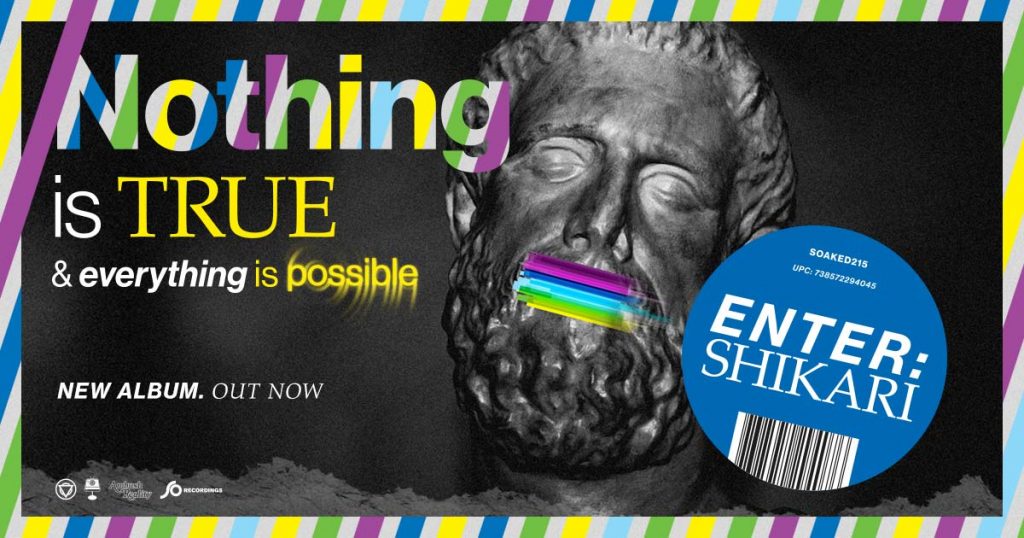
“We didn’t really plan this,” explains frontman Marcel “Schmier” Schirmer. “It was a very spontaneous decision because of the COVID-19 situation and the circumstances that came along with that. We were in the lucky position where we recorded one show last summer, and it was a great one, and we just said, ‘Let’s do it now because there’s no live shows for us or the fans, and that show was really something to remember.’”
The recording that became Born to Thrash came as a complete surprise to Destruction at the time. No plans had been made for a live album. They were presented with it by a friend who had decided to record their set on a whim.
“Everything about this was an accident,” Schmier says. “That show wasn’t supposed to be recorded. We didn’t know until it was finished. A friend of ours came into our dressing room and said, ‘Can I get a Jack Daniels from you? I have something for you’, and it was our friend Arthur who had recorded some bands at the festival and recorded us just for the hell of it. After we got home from the festival a few days later we took everything to the studio and made a rough mix of this show and we were surprised how great it was!”
I just hope that metal won’t get too conservative and die out, because we need the next generation to pick it up too.
[ Marcel “Schmier” Schirmer ]
Still, it may never have seen the light of day had it not been for the current crisis: “We just put it back in the drawer and thought about using it one day.” That day came sooner than anyone expected, but the decision to use it was, as Schmier admits repeatedly, quite spontaneous.
“The first obstacle was that the label doesn’t do spontaneous releases. They have a full schedule of bands: Nuclear Blast is the biggest metal label in the world so it’s not easy,” he says, “but on the other hand, when COVID came a lot of bands cancelled those albums, and the label was interested in trying something new. They have never done anything like that before.”
In another happy coincidence, Destruction was working with a film crew at the time on a forthcoming documentary release. To add to the backstage footage, the producers had shot the first three songs of the set. So the band now had live visuals to go with the audio.
“I called them up to say we needed some clips to promote the live album, and can you cut something together? We have three songs from the album on video now, in very good quality. So we have three video clips coming out for the album in the next three weeks, which is great too because the visual aspect is also important. No DVD though, but better than nothing.”
Born to Thrash was released as a stream on May 8. It is the first album to be issued by Nuclear Blast as a stream ahead of any physical release—the CD version doesn’t come out until June.
“It was important to us that people have access to the album quickly,” Schmier says, “not just in a couple of months when COVID is over. We need positive things now.”
As a veteran thrash metal band with an older fanbase, Schmier is under no illusions about the reluctance some of those fans have in adopting streaming. But while many still favour more traditional media like vinyl and CDs, digital platforms allow an artist to have their release available everywhere instantly.
“Metal fans seem to still have some fear of [streaming]. But streaming is so convenient and it’s getting bigger and bigger. When an album comes out today, you can listen to it in Australia, Tanzania, Baghdad, wherever, at the same time, on a phone or a computer. And that’s a great thing, because when I grew up distribution was complicated. You had to send your vinyl to South America, and then it would get bootlegged, and then it would never really come out … Streaming is the future and we have to accept it. It will be interesting to see what happens when the album is only available for streaming first. Maybe people won’t buy the physical copy, but we’ll see.”
To counter that problem, the band offered their fans a carrot on a stick, running a social media campaign asking fans to nominate their first live Destruction experience to be included on a poster with the CD. They expected a few hundred fans to contribute. More than 2000 got involved.
“We gave them a six-day time limit and we had over 2000 people contribute, so it was a lot more work than we thought in the end because we thought it would be only a couple hundred,” he says with a chuckle. “Usually a fan campaign on the internet will only get attention for one or two days, but this campaign lasted longer. At one stage we were asking ourselves how we would squeeze them all onto the poster, but it worked out.”
Since his recording career began with Destruction’s first EP Sentence of Death in 1984, Schmier has seen his scene and the industry rise and subside—the major-label mandated death of vinyl in the late 80s, the industry’s premature announcement of metal’s death in the early 90s and subsequent rise by the end of the same decade, and now the very real prospect of all hardcopy media going the way of vinyl.
“I think that maybe like vinyl in the 90s, it will just die out. There won’t be any factories left to produce CDs. In the 90s everything closed down. There was only one factory – one! – in the Czech Republic, that was doing all vinyl for a couple of years. Now there’s a few more, in Germany and the UK, but I think that’s going to happen with CDs, and also DVDs and Blurays. People have Amazon TV or Apple TV. I just hope that metal won’t get too conservative and die out, because we need the next generation to pick it up too.”
Except for a brief dalliance with Pantera-style groove metal during the 90s—when Schmier was not a part of the band for a while—Destruction has always delivered nothing other than straight-up thrash. Their musical orthodoxy belies an impulsive spirit that Schmier believes is essential. Otherwise, Born to Thrash may have still been sitting in a drawer somewhere.
“I’m a spontaneous person,” he says. “As a musician I think it’s important to be spontaneous. I’ve learned that from my job. When everything comes together like this, you just have to try it. Of course live albums aren’t so popular anymore. That’s what the label said when we came up with the idea. Now that nobody’s at live shows, maybe live albums will be popular again.”