Jun 15 2026, 9.34am / Features
To Joey & Brooke, I’ve written a lot of words on this site, but none …
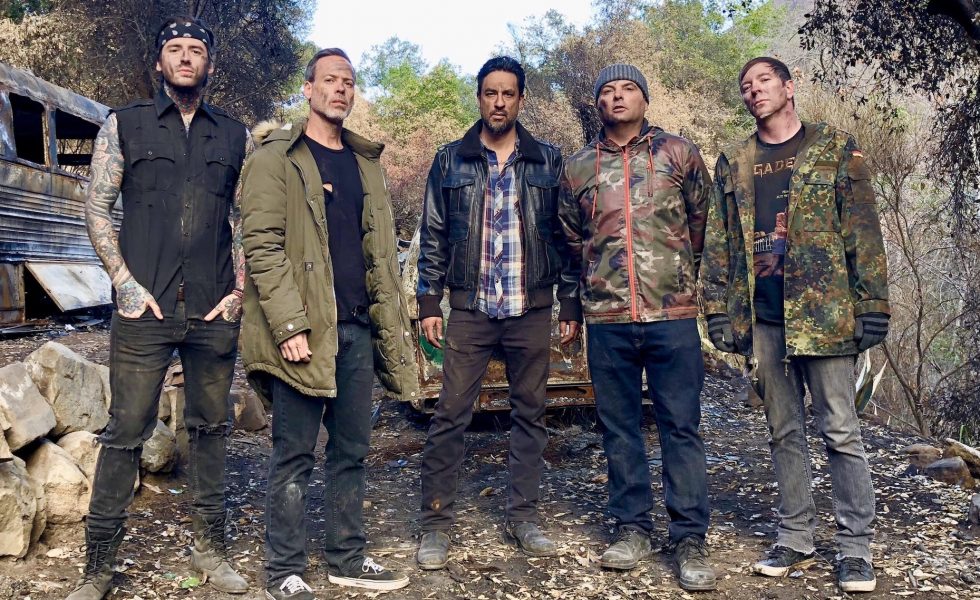
In this time, they’ve delivered a series of classic albums. Not the least is Suburban Teenage Wasteland Blues, but they haven’t let up. The group continues to release music which challenges preconception while breaking creative strides.
MORE: Dead Of Winter Festival: Drop Mammoth Second Line-Up Announcement
‘90s punk lit a spark. But what guitarist Jake Kiley finds more remarkable is that it’s never burnt out. Alongside a sizeable contingent of contemporaries, Strung Out have continued to stay the course. What’s more, they’re still selling out clubs. Fads burn out and movements collapse, but great bands? They endure.
Strung Out’s forays into the heavy side of punk still resonate. It’s still speaking to people. But why here in Australia of all places, halfway across the world? Jake can’t precisely sum it but feels Californian and Australian punks share a special kinship. Something that goes beyond the surf, skating and eucalypts trees.
But just as important still is that the music is still speaking to him. Decades after the fact he’s still buzzed on the thrill of climbing onstage or writing songs with likeminded souls. The group have cut an acoustic record and are soon to embark on a tour which will see them playing Suburban Teenage Wasteland Blues in full.
Bands are quick to assure the interviewer that things have “never been better” even as the rats are fleeing the sinking ship. But with a long-hauler like Kiley? There’s a feeling he’s speaking nothing but the truth.
Hysteria: You’ve been a musician in Strung Out as well as a punk for more than twenty years now–perhaps for your entire life. What’s changed or gotten easier and what’s stayed the same?
Jake Kiley: Well yeah! Y’know we’re fortunate enough to have been around for some time. It’d be about 25 years now.
For the most part? It’s been the same. It’s the same feeling as we had when we started it. Still that same love of being on stage, of getting together, creating new songs together and having people respond to that. It’s been an amazing journey and when it comes back to we’re still pretty much the same people we were back then.
We’re still pretty true to our roots and influences, the music that we grew up loving. I still listen to a lot of the same records that I grew up worshipping and looking up to the same guitar players. Now it’s about keeping it going. To be able to keep building off what we have and to try to take it to some new places as well.
You have to keep it fun and creative for yourself or else you can lose that spark. So that’s what we always have to do. Make sure that we’re all on the same page and trying to do the same thing. Keep it going as long as possible!
You know I’ve heard so many horror stories in the music industry my entire life about some labels screwing you over or not putting out your record or saying one thing and not delivering. We feel so fortunate that we’ve never had to deal with that.
[ Jake Kiley ]
H: You guys have been with Fat Wreck Chords–Fat Mike from NOFX’s label–from the beginning. The label may not possess as an expansive roster as it may have a little back but what’s really striking is the loyalty and endurance of many of the labels bands. What’s kept you guys in there for so long?
JK: Well it’s a really great home y’know? They treat you well. They treat all the artists well and it’s very much a family environment. We’re on a first name basis with everybody that works there. We’ve known Mike since 1993 and his wife Erin as well. They’re just great people, they give us complete control of what we want to do.
They’ve supported us in everything we’ve wanted to do even if sometimes maybe they didn’t completely understand what we were trying to do! They believe in us and they’ve always been there. And you can trust them. They’re a very honest label.
They’ve never been sued by a band. They’ve never had people say that they don’t pay them their royalties and some of these things you hear about with some labels. It’s very much a great-comfortable-very good working environment. You know I’ve heard so many horror stories in the music industry my entire life about some labels screwing you over or not putting out your record or saying one thing and not delivering. We feel so fortunate that we’ve never had to deal with that.
You don’t want to fuck with something that’s working so well! Look at Lagwagon, The Lillingtons and Good Riddance all those bands stayed on the label their entire careers too. That really says something.
We like being able to work with someone we trust and that we respect. Mike being in NOFX, being in a band himself, that’s always made him someone we can turn to with questions like, “Hey! What steps should we take? What’s the right course for a band like us?” He’s not just some label boss that doesn’t have a tie to the music scene or was never in a band. He’s been through the whole thing! It was always very valuable for us to have a mentor like him.
Back then MTV was very powerful and major record labels had a lot of control over what was ‘cool’ and what wasn’t. They could destroy an entire scene if they wanted.
[ Jake Kiley ]
H: Another broad one. What do you think the greatest impact was of the big explosion of punk in the ‘90s? Has it changed the world in some way?
JK: Well what really blows me away is that our band and other bands that came up in that time is that we’re still really relevant today. People still go out and see sell-out Lagwagon shows! They still come out and see us. Propagandi are still doing great.
All the bands that the label fostered and got off the ground, we’re not just has-beens. We’re out there drawing big crowds, selling good amounts of albums still in this current day and age. And I think it’s because we did it for the right reasons you know? It was a music we loved at the time and it was such a fun community to be apart of at that time.
We knew something was gonna happen before it blew up. We could tell like, “This type of music it’s cutting edge!” It’s got the music, all the chops, the technical side like metal but it’s also relatable. It’s got the street-level humorous side of punk rock. And the fusion of that has, I think, kept it valid. It’s amazing to see that it’s still relevant and that so many bands are still doing so well.
But you know things come and go. I was doing an interview earlier where we were talking about how the metal scene really died in the ‘90s. It had gotten so overblown in the late 80s—all through the ‘80s. Back then MTV was very powerful and major record labels had a lot of control over what was ‘cool’ and what wasn’t. They could destroy an entire scene if they wanted.
But now? Now everything is very co-existent. Because of the internet there aren’t factors that can control it as much. Everyone is out there doing their own thing. You’re seeing punk rock doing well, you’re seeing metal doing well. You’re seeing rap and country and pop. It’s all co-existing in a way that it never really used to. I think that’s a good thing.
But I’m actually pretty shocked that our band is still relevant. I always figured by this time something crazy-else would be going on in music. No band from 1994 would be around! Kid’s wouldn’t care about it even if maybe there still were some fans there. But honestly, it’s doing as well today as it ever has! I feel we’re still growing.
It was very exciting in the mid-90s to see the bands blow up. Take The Offspring. It was exciting to see them go from a small club band to this big, big thing. That was very exciting.
We never had that level of success but at the same time, it’s allowed us to be able to continue doing what we love and make a living off it! So at the end of the day, we’re just really appreciative of that. We’re so lucky to have just been a part of this scene.
H: Moving on to the present. You’ve released a steady stream of albums over the years. Is it a challenge to continue to motivate yourselves to make meaningful and relevant music in a band which has been pushing on for so long?
JK: Sure, sure. But it’s a fun challenge you know? We’ve done things—made records—that we’re very proud of. But you know what? There’s still a lot more in us. I feel our best days are still ahead.
We’ve been fortunate enough to have a chemistry within us that these songs kind of just write themselves. It’s a crazy thing. When we get together we just come up with these ideas that really flow. The next thing you know we have these things that go way beyond what we initially thought punk could be.
It’s just a real special chemistry. I don’t think we’ve ever felt like we’ve hit a wall. We’ve never gotten to a point where we feel like we’ve done everything we can do or it’s not fun anymore. To me personally, I love it as much as ever.
We actually just did an acoustic record [an EP titled Black Out The Sky] that will come out in about a month. That’s pretty cool because we’ve just never done anything like that before! It’s different for us, definitely another chapter. It’s not a new direction of anything it’s just another little side of us.
It was like, “Let’s see what we can do in a more restrained environment. Let’s just challenge ourselves and see what we can do with this.” And it actually turned out really cool. I think it’s good to just throw down what you’ve done, what you’re known for and kind of ignore it and see what else you can do.
But that also reinvigorates our fire for the next full-blown, full-on album. It’s like, “Okay cool, we’ve done this but now let’s just got the polar opposite: 100% fucking gnarly!”
H: How does coming from a punk and metal background prepare you for working in a more stripped-back acoustic environment? Not to mention that you have five people in the band as well!
JK: Right, right. Definitely a departure in a lot of ways because when we write our usual electric records we always construct the music first. We’re usually putting everything in there to try and make it as complex and interesting as it is, and can be, musically. Then Jason [Cruz] our singer takes that and puts the lyrics and the vocals on top of that. It creates this full piece.
This one it was definitely more of a strain. We went in there with a couple of chord progressions–stuff that we thought was cool–but it was really more about the vocal completing the song. There’s a little more weight on the vocals’ shoulder in this sort of thing because just by nature these songs are just much more basic, much more naked and stripped down.
Honestly, as a guitar player it wasn’t my most adventurous record. It’s not my most self-fulfilling recording experience or process because I’m just in their basically strumming some open chords. But at the same time what we’ve gotten out of it is really cool. It’s just like a yin and a yang. There’s two sides so why not challenge yourself once in awhile?
Now we have this tool. We have these songs. They’re all original songs. There’s two covers of our own, but six original songs that are just acoustic songs. Now we can play them at different types of events. We can do different types of sets! Acoustic segues and things like that. It just opens us up to doing a little bit more.
But y’know, me inside? I’m really excited for this next electric record. Having been so restrained in this last process now the fuse is lit to do something really impressive, dynamic, and elaborate for this next record.
We grew up skateboarding. We grew up listening to Suicidal Tendencies and Excel and Metallica. The early skate punk kinda stuff. So we are just another progression of that. I think Australia really appreciates that as well.
[ Jake Kiley ]
H: You’ve had a really big following down here in Australia from pretty much since the get-go. Why is it do you think that Australians have such a special resonance with punk music? It’s not like we’ve been at the geographical epicentre of hardcore or the whole UK thing. What speaks through to us?
JK: Well I think the whole Southern Californian and the Australian culture are very similar in a lot of ways. We’re both very surf-based cultures and skateboarding based. There’s a lot of similarities.
I think there’s the fact there is that and that you guys are just kind of a rock ‘n’ roll country. You guys are just a hard rocking, partying kinda country! It’s fucking great! We love you guys for that. You guys respond well to the kind of punk rock that we play.
We grew up skateboarding. We grew up listening to Suicidal Tendencies and Excel and Metallica. The early skate punk kinda stuff. So we are just another progression of that. I think Australia really appreciates that as well.
I think there’s a lot of commonality. We come from a similar background … I don’t know man but it fucking works! You guys have always been a wonderful; wonderful fanbase to play to. You guys really come out to support the shows. Not to overthink it but it’s a really cool kinship.
You have a lot of East Coast hardcore bands from the US that do really well in Europe. Germany and England, places like that. I don’t know why. Our band has never really done that well in Europe where some bands do. I mean Lagwagon are huge in Europe! They just don’t really get us as well. They’re just that well connected with East Coast hardcore whereas our Pacific skate punk hardcore really appeals to you guys! So it fucking works man!
H: Is there anything you’d like to throw out to the Hysteria readers before we leave off?
JK: Just that we’re really looking forward to this tour! We’re super excited to be playing the record Suburban Teenage Wasteland Blues in its entirety for you guys. We have a new drummer and it’s insane! He’s thrown a whole new life into our band and it’s like the fire is relit.
We’re excited to come down and play these shows for you guys. It’s what we’re all about. If you’ve ever seen us before you’re going to be blown away by what we’re doing now. It’s going to be great!
Thursday 21 June // Sol Bar // Maroochydore
Friday 22 June // The Brightside // Brisbane
Saturday 23 June // Miami Tavern // Gold Coast
Sunday 24 June // Byron Bay Brewery // Byron Bay
Tuesday 26 June // Small Bandroom // Newcastle
Wednesday 27 June // Long Jetty Hotel // Bateau Bay
Thursday 28 June // Factory Theatre // Sydney
Friday 29 June / Narrabeen RSL / Narrabeen
Saturday 30 June // Croxton Bandroom // Melbourne
Sunday 1 July // Frankston Pelly BA // Melbourne
Wednesday 4 July // Fowlers // Adelaide
Thursday 5 July // Prince of Wales // Bunbury
Friday 6 July // Northshore Tavern // Hillarys
Saturday 7 July // Hell Hole // Perth