


Jun 15 2026, 9.34am / Features
To Joey & Brooke, I’ve written a lot of words on this site, but none …
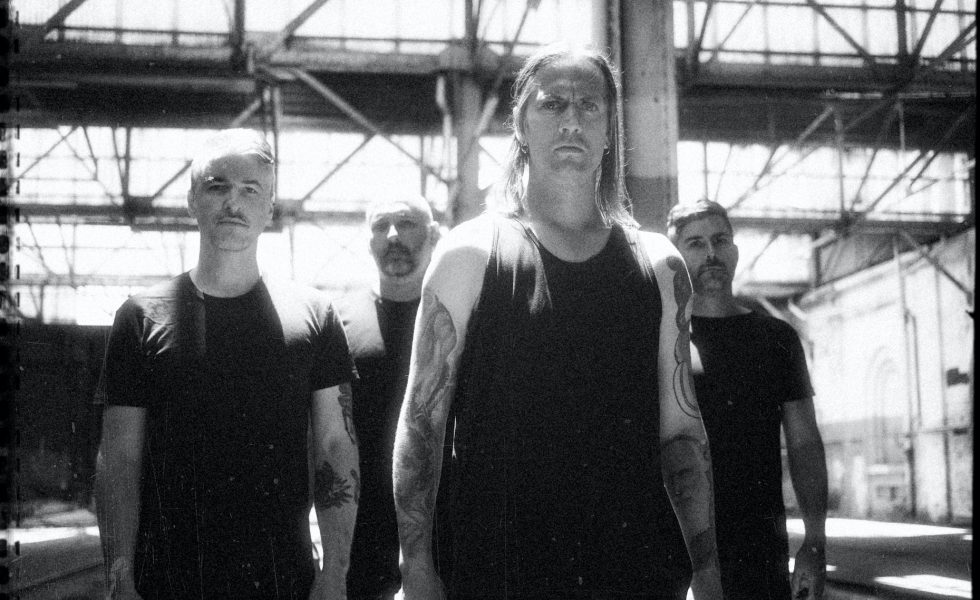
MORE: NOFX: Fat Mike and his Eternal Footwaer Gratitude REVIEWS: POLARIS: Fatalism // THY ART IS MURDER: Godlike // C.O.F.F.I.N // Australia Stops // HYRO THE HERO: Bound For Glory // TEENAGE WRIST: Still Love // LO!: The Gleaners
The Gleaners examines subjects such as extinction and environmental degradation, white privilege and colonialism and the role each of us plays. It is the culmination of a storyline vocalist and lyricist Sam Dillon has developed since first joining Lo! almost a decade ago. As they prepare to tour in June, we got Dillon to talk in greater depth about the creative concepts behind the band’s music.
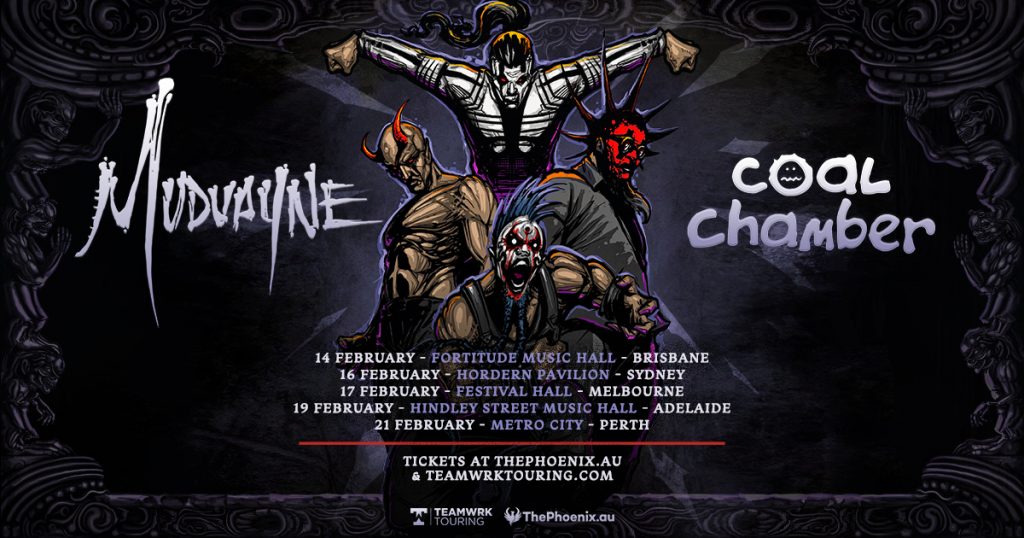
HYSTERIA: What is the major focus of the new album – is it an anti-capitalist statement, or is there more to it than that?
SAM DILLON: It’s holding ourselves accountable as monsters of our own making, basically. It’s the same underlying sentiment that I hold up a mirror to – what’s going on, but also, your place in the cogs of the machine, as well. No one is all completely evil, and no one is all completely good. So being able to look at yourself, and having that sort of scope – that magnifying glass – and also address it and to illustrate some cool, poignant points for the listener.
H: The accompanying visuals that have gone along with that are a bit ghastly, maybe a bit terrifying and totally fits in the whole idea. Regardless of the visuals you might put to it, your music has always had that unsettling feel.
SD: Yes. We definitely like extremes. So all the bands we’re influenced by are always on the very far end of the spectrum – whether that’s love, loss, science or religion, we’re always going to go head-over-heels into that subject matter, and the best way to accompany that and be genuine to the songs and the effort that we’ve put into writing and sculpting these little ecosystems of art is to make sure that the animals and the visuals that come out of that are top notch. We’re very lucky that in the arsenal of band members we have a lot of creatives. We have animators, we have film producers, we have web designers, illustrators… so we’re able to stay on top of that without breaking the band. But also, keeping true to our own genuine expressions.
H: Is everything done in-house, within the band itself?
SD: Almost all of it, yes. We do have some wonderful support from our label in Berlin, Pelagic Records – the home of The Ocean, Cult of Luna, these kind of things. They’ve been with us since Day One. But Carl (Whitbread) is the main brain of the band when it comes to orchestrating the song structure, I handle all the lyrics, and we all have our very important roles to play in the way the aesthetic and the business is run. So we’re all really proud of it, and it’s gone beyond band membership. It’s more like a family unit.
H: Way before you were even in the band, the aesthetic had already been set for Lo!
SD: In the words of Carl, he says ‘Go hard or go home’ when it comes to his band. He is definitely the puppetmaster when it comes to the aesthetic of the band, and in many cases the artwork is preliminary to the actual songwriting. So that shows how precise the needle has to land when we’re doing a release.
H: Everything is geared toward the album, then. Does that make it easier as a lyricist, to present those ideas to the band?
SD: I’m very fortunate that the brains trust of Lo! always allows me complete artistic freedom when it comes to writing lyrics, and the vocal tone of what the album is going to be. So these key points and the characters that I’ve weaved into the last three releases that I’ve been on, Carl and I will have a working dialogue about what is the key phrase, what is the meaning, what is the meat and bones of what this album’s lyrics are going to be about. That gives us a really nice pathway of how we’re going to write, and what the cinematic, theatrical elements we are going to make part of the songwriting. So people might say that is limiting, but I think it’s the other way. It definitely allows you a nice, rich palette to work on maybe one subject matter, but all the different elements that are going to make it up. Even though this is a 2023 release, The Gleaners is actually the arc storyline from 2015’s The Tongueless and 2017’s Vestigial, and it’s a triptych! So you’re looking at three panels like an altar piece would be in a church – same subject, painted in different ways. You still get that visceral sludge, that lovely groove that’s always going to be there, but all these cinematic, tasteful elements that are going to pop out and show you more aggression.
H: It’s been quite a long time between when you began this until now, so was it deliberately planned across the entire time?
SD: It’s a story that’s taken almost a decade, really, to come to fruition. It’s a subconscious move from the first release that I was involved in, into Vestigial, and then I realised the core characters were always part of the makeup of where I was coming from. So I really am distilled on some of these themes and some of these characters, so why not express them, flesh them out and give more of the narrative back to the themes of what we’re talking about: extinction, colonialism, white privilege, the apathy toward our natural environment, and also shedding a bit of light on the values that happened within Australia. I’m very interested in the xenophobia and the apathy towards the natural environment that happens within our country. Luckily, because of the abrasive way that I sing, my accent is broken down and it has a global appeal, as well. So artists like Pink Floyd, Gallows, even Napalm Death, even though they are British, they have a worldview when it comes to loss, extinction, and the human condition.
I find that people can be advocates, people can be against things, but often what I’ve found is people being the authors of someone else’s stories. So a lot of podium-hogging is going on. Oxygen in the room is being used up by people who should not be allowed to talk for someone else. I feel that we are a bit parasitic in that way. We are entitled, we are the preacher madly spouting at the pulpit.
[ Sam Dillon ]
H: Given that you’re talking about things like colonialism, extinction and the environment, we seem to be in – it may not be a watershed moment – but the debate surrounding things like the Voice to Parliament is very loud and people are trying to be very divisive makes it feel like it’s very topical. But the things you write about are topical all the time, it’s just that there now happens to be a confluence post-pandemic that seems to be pushing those issues to the fore.
SD: Definitely! The lyrics that featured in this release were prepared over the course of, say, late 2019, all through 2020 and a tiny bit of ‘21. So it had already been formulated and it was off to the presses. But when you have these watershed moments that you’re talking about, I find that people can be advocates, people can be against things, but often what I’ve found is people being the authors of someone else’s stories. So a lot of podium-hogging is going on. Oxygen in the room is being used up by people who should not be allowed to talk for someone else. I feel that we are a bit parasitic in that way. We are entitled, we are the preacher madly spouting at the pulpit. So those fantastical characters that I have that are quite vulgar and visceral within the lyrics – there is a little bit of each one in us that we should really check. But, also, understand the damage that can happen from us throwing our two cents into the ring each time something comes up.
H: You must be looking forward to presenting this all live now.
SD: With Lo!, although it is quite intricate with the way we think about how we’re going to record something, with all the elements, the key to all of it is making sure it can be executed live. The viciousness of the hardcore elements of our band, the black metal elements of the band, we always want to record with the live audio aspect in mind. You can’t replace or replicate that. As long as we can play it live, and be genuine about our performance, and that passion that goes into the performance, then that’s the way we like to present our songs. It’s already in the back of your mind what the final song will be celebrated as on stage, or received by the audience.
H: Your performance at the Blacken Festival last year was something of an eventful evening.
SD: Fortunately we have an extremely talented drummer. His talents don’t just extend to breaking sticks on the kit – they extend to breaking bones as well! I feel he has this cavalier attitude towards the human body, and although he is Benjamin Button in the face, I would say the cartilage in his legs is having a hard time! He’s been playing the drums for so long, skateboarding, surfing – all of that. He did have a bit of mischief on a steel spike that was poking out of the ground near the hose reel. He was very fortunate that some of the organisers of Blacken – which is one of the remotest metal festival in the world – were able to get him to the emergency services near Alice Springs. They patched him up, he was able to hang out with one of his favourite bands ever – Revocation – while they were going through their paces ahead of their gig, and he was thankfully able to play the entire set with Lo! that evening with his leg out of action. So he just switched to single kick rather than double kick! He got a lot of props from other drummers who only learned what happened a few hours previous. So I’m hoping that before any tours happen this year he doesn’t decide to take up spelunking or anything like that.
H: Given that the Uluru Statement From the Heart was conceived at the same location Blacken was held at, what was it like performing songs with such themes as yours at that festival?
SD: I was very humbled and appreciative as soon as we arrived, because it was clearly obvious to me that it wasn’t intrinsically a throwaway festival interloping into a sacred area, making some money and then bailing. It is very intertwined with what is going on. Pirate and the other organisers, everything from the catering to the road crew to the Welcome to Country ceremonies and the communication that was happening from the local community is super well respected, and not in a novelty act way. It is very above-board and I like the fact that quite a few Indigenous artists were included on the bill. They are active and vocal about the fact that we were there as guests, not as people coming there for a free ride in a very sacred part of the country. We did some nice walking around in the landscape, but that of course came with making sure that it was okay before we went into certain areas. There’s quite a few places in the hills of specific cultural significance, so you don’t want to put a wrong foot there. It’s all about understanding the differences and the similarities between people and there’s such a rich oral history and it’s all linked to the countryside. You can’t just be barging in.

